

 8 minutes read


A full HD clip can consume storage space quickly, take longer to upload, and struggle on slower connections or older devices. That’s why many people choose to downscale 1080p to 720p. Whether you’re downloading content, or sharing on social media, Full HD isn’t always necessary. Sometimes, all you need is a lightweight, compatible format to save space and ensure smooth playback.
In this article, we’ll break down the real differences between 720p and 1080p, explain why lowering resolution can actually be a smart move, and walk you through several easy ways to convert 1080p videos to 720p on Windows, Mac, and online tools.

Part 1. 720p Compared to 1080p: Why Lower Resolution?
1080p (also called Full HD) has a resolution of 1920×1080 pixels, while 720p (HD) comes in at 1280×720. 1080p packs more pixels into every frame, which means sharper details and cleaner edges. You’ll notice this most on large screens or when watching high-motion content. But higher resolution also means bigger files.
That extra size affects everything: storage space, upload time, download speed, and playback performance, especially when you’re grabbing videos from platforms like YouTube or sharing files online. So why do people intentionally downgrade? Because in many real-world situations, 720p is more than good enough.
- Smaller file size: Saves storage and makes videos easier to upload, download, and share.
- Faster loading and streaming: Great for slower internet connections or mobile data.
- Smoother playback on older devices: Less strain on CPUs, GPUs, and battery life.
- Practically similar quality on small screens: On phones and laptops, most people won’t spot a big difference.
- Perfect for social media and casual viewing: Many platforms compress videos anyway, so 1080p often gets reduced behind the scenes.
Part 2. How to Downscale 1080p to 720p on Windows and Mac
If you’re regularly downloading videos in Full HD and then realizing they’re too large to store or share comfortably, doing everything in two separate tools gets old fast. Instead of grabbing a 1080p file first and converting it later, FliFlik UltConv Video Downloader lets you download videos directly as 720p MP4 in one smooth workflow.
UltConv offers 10x faster download speeds, includes a built-in browser for easy discovery, and provides private folders to keep your files secure. In short, UltConv is built for people who want smaller files, flexible formats, and full control over quality all from one desktop app, without browser ads or unreliable online converters.

- Download YouTube videos in 720p (or other resolutions) without extra conversion
- Supports MP4, MP3, and multiple output formats
- Batch download and convert multiple videos at once
- High-speed processing with stable desktop performance
- Works with thousands of video websites, not just YouTube
▼ How to Download YouTube Videos to MP4 with FliFlik UltConv Video Downloader?
Saving videos from YouTube as MP4 files is easy with FliFlik UltConv. Once the software is installed on your Windows or Mac computer, the whole process only takes a few minutes.
 Secure Download
Secure Download
Secure Download
-
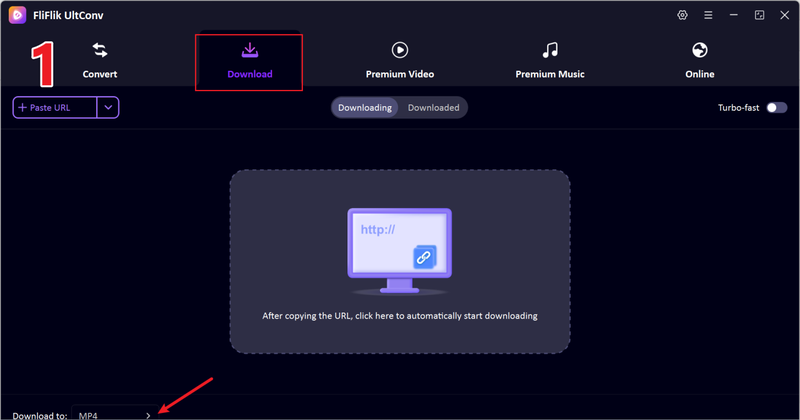
Launch UltConv and head to the Download tab. At the bottom of the window, click the Download to option to choose what format you want.
-
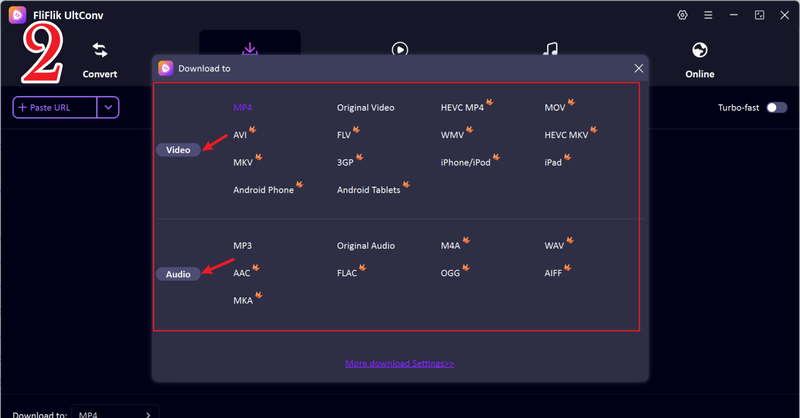
From the format menu, pick MP4 as your output. You can also choose the video resolution you want, including options like 720p, 1080p, or even 4K.
-
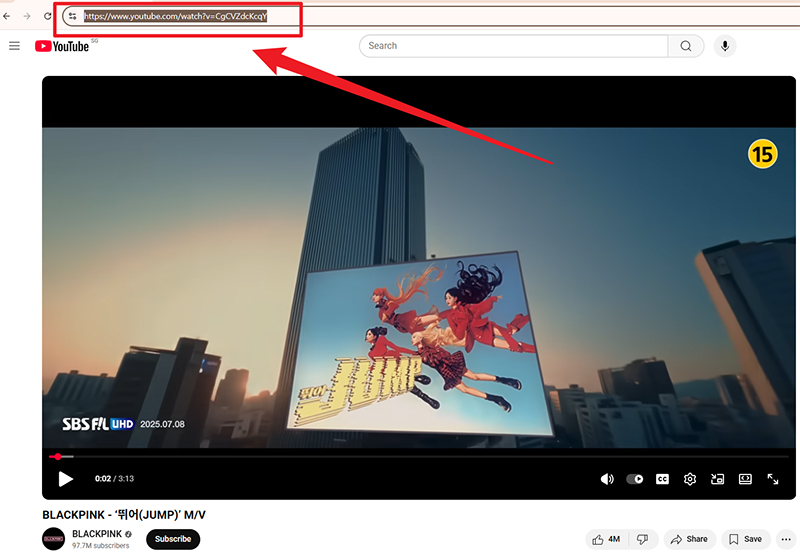
Open YouTube in your browser, find the video you’d like to download, and copy its link from the address bar.
-
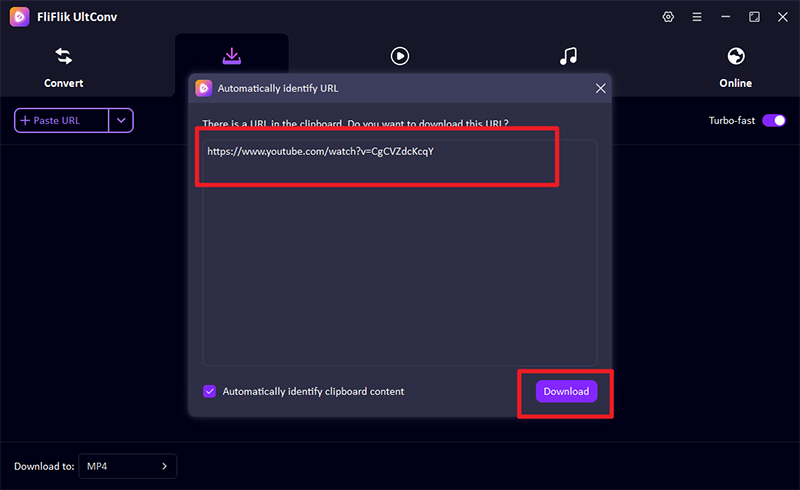
Go back to UltConv. Most of the time, it will detect the copied link automatically. Once it shows up, hit Download.
-
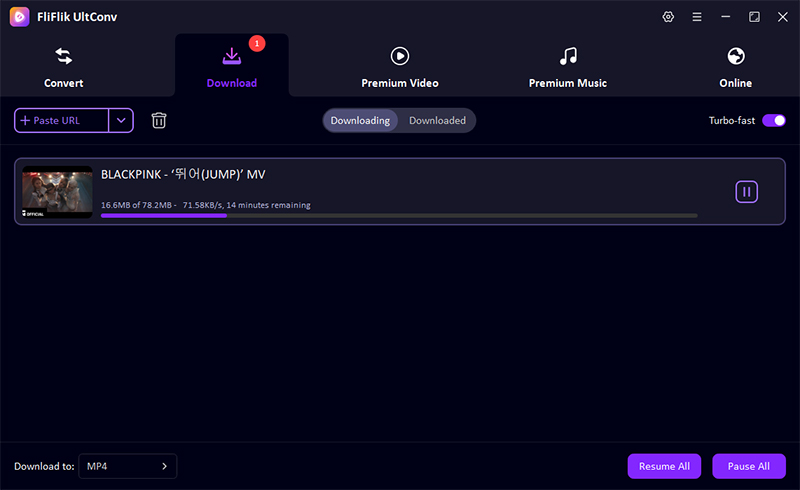
The download starts immediately. When it’s done, your MP4 file will be saved on your computer, ready for offline viewing without ads, buffering, or interruptions.


Part 3. 3 Best Online 1080p to 720p Converters
1. Online-Convert.com

If you’re looking for a straightforward way to convert 1080p videos down to 720p without installing software, Online-Convert.com is a solid place to start. This browser-based tool supports a wide range of video formats, including MP4, MOV, AVI, and MKV, making it useful whether your file comes from YouTube, a camera, or screen recordings. For users who just want a quick downgrade from Full HD to HD, the preset options make the process simple.
2. Kapwing

Kapwing offers a clean workspace where you upload your video, change the canvas size or export settings, and download the final 720p file. This makes it especially appealing if you also need light edits, such as adding subtitles, resizing for social media, or trimming clips before exporting. Another advantage is its cloud-based workflow. Kapwing also supports direct links from platforms like YouTube, so you don’t always need to upload large files manually.
3. SnapAny

SnapAny is best known as an online video downloader, but it also works well when your goal is to grab a video and save it in 720p instead of 1080p. Rather than uploading local files, SnapAny focuses on URL-based downloads. The interface is simple and beginner-friendly, with no account required. You can quickly switch between available resolutions and formats, including MP4, which helps when you’re trying to reduce file size without losing too much clarity.
Bonus Tip: How to Make a Lower Video Quality Meme

Low Quality Meme Maker is the perfect “anti-editors” of the digital age. It views pixelation and compression as a creative choice rather than a mistake, allowing you to embrace the “fried” aesthetics without needing professional tools. Just a few sliders are needed to instantly remove details and add specific visual imperfections, making the viral emoji pack appear realistic and lifelike.
This tool is designed for quick and satirical use, requiring no registration or technical knowledge. For anyone who wants to achieve original, low-resolution effects without worrying about setting export parameters or bitrates, it is a browser-based shortcut. Its goal is to achieve a perfect, intentionally “rough” effect in just a few seconds, getting you straight to the point and capturing the humor.
FAQs
Q1. Does 720p save a lot of data?
Yes, it does. Dropping from 1080p to 720p can cut file size by roughly 40–60%, depending on bitrate and codec. This means faster download speeds, less storage space usage, and smoother playback on slower network connections.
Q2. How to lower the resolution of a video?
You can downscale a video using desktop software – FliFlik UltConv. The basic idea is simple: load your video, choose 720p as the output resolution, pick a format like MP4, and export.
Conclusion
Downscaling 1080p to 720p can save space, speeding things up, and making videos easier to share or stream. If you want a reliable all-in-one solution for downloading and converting videos, FliFlik UltConv Video Downloader stands out as the most practical option. It handles YouTube downloads, supports multiple formats and resolutions, and makes converting 1080p to 720p straightforward even for beginners. For anyone who prefers a fast, offline workflow with more control than web tools, it’s easily the best choice.
Secure Download
Secure Download
Hello, I research and introduce useful solutions for AI videos, images, and audio tips in our daily life. If you learn these things, you can easily deal with the problems of the new era.